
All Your Citizenship by Investment Questions, Answered (2026)
The plain-language 2026 reference on Caribbean Citizenship by Investment — costs, family rules, residency, taxes, and timelines for all five programmes, with direct links to government sources.

Fountain pen on handwritten cream paper — the quiet shape of a considered answer.
This is the plain-language reference we wish more clients had read before they spoke to their first citizenship-by-investment firm. It covers, in 2026 numbers, the questions that come up on almost every initial call.
Every figure is sourced from the official Citizenship by Investment Unit of the country in question. We link to each source directly so you can verify before committing. Programme rules change, occasionally without much notice — always confirm with the source before taking action.
How much does Citizenship by Investment cost in 2026?
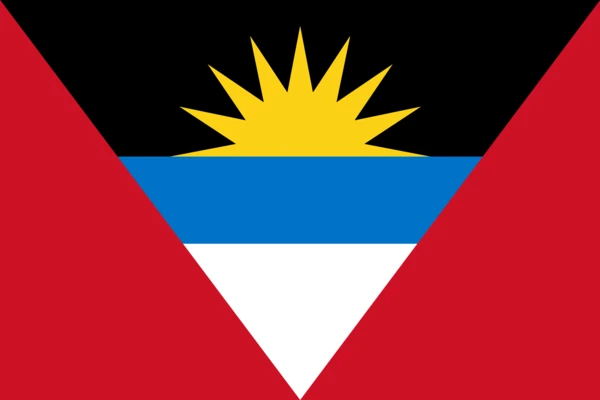
Antigua and Barbuda — National Development Fund (NDF)
- Single applicant or family of up to four: USD 230,000 flat
- Family of five or more: USD 230,000 + USD 10,000 per additional dependant from the fifth onward
- Source: cip.gov.ag
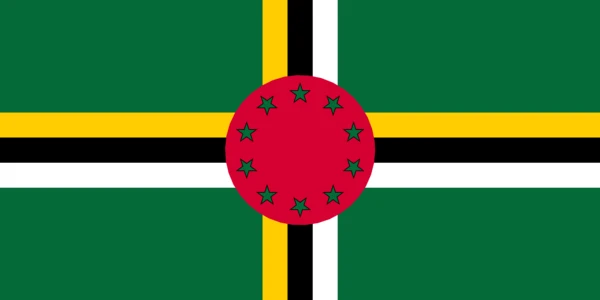
Commonwealth of Dominica — Economic Diversification Fund (EDF)
- Single applicant: USD 200,000
- Main applicant + up to three dependants: USD 250,000
- Each additional dependant under 18: USD 25,000
- Each additional dependant 18+: USD 40,000
- Source: cbiu.gov.dm
Grenada — National Transformation Fund (NTF)
- Single applicant: from USD 235,000
- Family rates apply; details published via authorised agents
- Source: imagrenada.gd
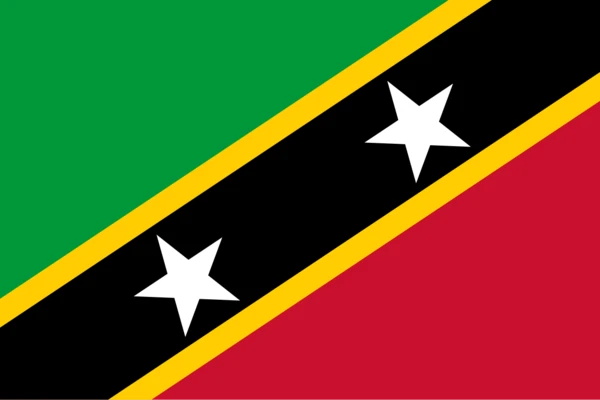
St. Kitts and Nevis — Sustainable Island State Contribution (SISC)
- Single applicant or family of up to four: from USD 250,000
- Source: ciu.gov.kn
Saint Lucia — National Economic Fund (NEF)
- Main applicant + up to three dependants: from USD 240,000
- Additional fees apply for larger families
- Source: cipsaintlucia.com
These are government contribution figures only. Government processing and due-diligence fees apply per applicant, vary by programme and family size, and are published on each Citizenship by Investment Unit’s website. Add advisory fees on top.
How much does it cost for a family of four?
Family of four (two adults + two children under 18), using each programme’s donation route:
| Programme | Family-of-Four Government Contribution |
|---|---|
| Antigua and Barbuda | USD 230,000 (flat — no per-person uplift up to 4) |
| Dominica | USD 250,000 |
| Grenada | From USD 235,000 (verify exact uplift with authorised agent) |
| St. Kitts and Nevis | From USD 250,000 (flat up to 4) |
| Saint Lucia | From USD 240,000 |
Antigua is meaningfully the most family-friendly at this household size — the same flat figure for one applicant or a family of four, with no per-dependant uplift until the fifth person is added. For larger families, the gap widens further in Antigua’s favour.
Can I add my wife or husband?
Yes — in all five programmes. Spouses are included as dependants on a single application, provided the marriage is legally recognised in the spouse’s jurisdiction at the time of submission.
Can I add my adult child?
Yes, with conditions. Adult children may be included as dependants if they are unmarried, financially dependent on the main applicant, and (typically) enrolled in full-time tertiary education. The upper age limit varies:
- Antigua, Dominica: up to age 30 in most cases, with documentation of financial dependency.
- St Kitts, Grenada, St Lucia: generally up to age 25–30, with the same dependency requirements.
This is one of the areas where programmes differ most. Always confirm the current rule with the relevant CIU before assuming an adult child can be included.
Can I add my parents?
Yes, in all five programmes, generally for parents aged 55 or older who are financially dependent on the main applicant. Some programmes require both parents’ documents even if only one is included. Antigua is among the most flexible on parent inclusion.
Can I add my siblings?
Yes, but with stricter conditions than spouse/children. Antigua’s programme is the most accommodating for sibling inclusion — unmarried, financially dependent siblings of either the main applicant or the spouse can typically be added. Other programmes allow siblings under narrower conditions; some require additional documentation evidencing the dependency.
If your application includes siblings, this is a question to surface in the initial consultation, not later.
Do I need to live there?
No, with one exception:
- Antigua and Barbuda requires the main applicant to spend 5 days in the country within the first 5 years of holding citizenship. This is a one-time, low-burden requirement.
- Dominica, Grenada, St Kitts and Nevis, Saint Lucia: no physical residency requirement, before or after.
None of the five programmes require you to relocate, give up your existing residency, or report taxes in the country of your new citizenship. (Tax matters are handled in your country of tax residence, which is a separate question — see below.)
Is this residency, or actual citizenship?
It is full citizenship. You are granted the same legal status as a person born in the country. You receive a passport. The status is permanent, passes to your children, and is protected by the country’s Constitution.
It is not a residency permit, a long-stay visa, or a “golden visa.” Caribbean Citizenship by Investment grants citizenship directly.
How long does the process take?
Three to six months from the day a complete file is submitted to the CIU, for all five Caribbean programmes. Some programmes offer expedited options under specific circumstances, but the standard timeline is three to six months — that is the timeline we plan around, and the timeline any honest firm will quote.
A firm promising 30-day approval is misrepresenting the process. Due diligence cannot be compressed.
Will I pay tax in my new country of citizenship?
In almost all cases, no. The five Caribbean programmes do not impose tax on income earned outside the country, do not impose wealth tax, do not impose inheritance tax on foreign assets, and do not require you to file local returns unless you become tax-resident there. You become tax-resident only by physically spending sufficient days in-country (typically 183+) — none of the programmes require this.
Important: this does not affect your tax obligations in your country of current tax residence. Acquiring a second citizenship does not, by itself, change where you are tax-resident. For tax planning matters, you should consult independent tax counsel in your home jurisdiction.
What is “due diligence” and how strict is it?
Every Caribbean CIU runs every applicant through enhanced due diligence performed by independent third-party firms (typically Exiger, S-RM, Sentinel, World-Check, and similar). The applicant pays the due-diligence fee directly; the provider reports to the CIU, not to the agent. This independence is the structural protection that prevents agent capture.
Caribbean CBI programmes are widely considered among the most rigorous due-diligence regimes in the investment migration market — more rigorous than several European residency programmes by orders of magnitude. Files with material issues (criminal record, sanctions exposure, undisclosed assets, source-of-funds problems) are routinely denied.
Can I visit Europe with a Caribbean passport?
Yes. All five Caribbean passports currently retain visa-exempt short-stay access to the Schengen Area. Two separate EU systems matter:
- EES is the border entry-and-exit registration system. It is already operating and records eligible non-EU travellers at the border.
- ETIAS is a pre-travel authorisation. It is not yet open for applications; the EU expects it in the last quarter of 2026. The announced fee is EUR 20, and an approval will normally remain valid for three years or until the travel document expires.
Visa exemption is not a guarantee of admission. Travellers should check the official EU status and the destination country’s entry rules before each journey.
Can I visit the United Kingdom?
This is where 2026 brought a meaningful change:
- Antigua and Barbuda, Grenada, St Kitts and Nevis: visa-free access to the United Kingdom continues, via the UK’s Electronic Travel Authorisation (ETA) system — equivalent to ESTA, applied for online before travel.
- Commonwealth of Dominica: visa-free access was withdrawn in July 2023. Dominican citizens now require a standard UK visitor visa.
- Saint Lucia: visa-free access was withdrawn effective 5 March 2026, with a transition period for pre-booked travel until 16 April 2026. Saint Lucian citizens now require a UK visitor visa.
The UK government changes affecting Saint Lucia were published in the Statement of Changes HC 1691 (5 March 2026). The Dominica change remains in effect since 2023.
If unrestricted UK mobility is a priority for your family, the three programmes that retain ETA-based access — Antigua, Grenada, St Kitts — are the relevant options in 2026.
Can I include the citizenship in my estate plan?
Yes. The citizenship is heritable: it passes to children born after the grant, and (in most programmes) can be transmitted to children born before the grant via a separate registration. The passport itself expires on the standard cycle (typically 10 years) and is renewed routinely. The underlying citizenship status does not expire.
We handle renewals and dependant additions for life as part of our Lifetime with PassPro service.
How do I know if a CBI agent is reputable?
The single most important check: the firm must be a Government Authorised Agent, registered on the country’s official CIU register, in the country whose programme you are applying through. Authorisation is published. Anyone selling CBI without it is operating outside the programme.
PassPro is a Government Authorised Agent advising on all five active Caribbean programmes, and every file we accept is filed through a Government Authorised Agent registered with the issuing country. The relevant CIU registers are linked from our Government Authorised Agent page.
Beyond authorisation, the field guide we wrote on agent diligence walks through the six warning signs worth watching for.
What’s the next step?
A private conversation. We listen first, identify which of the five programmes is likely to fit your family’s circumstances, and tell you honestly if the answer is “none of them.” Begin a confidential conversation when you’re ready.
You can also schedule a private consultation with a senior advisor, request a written diagnosis for your family’s situation, or speak with a Government Authorised Agent directly — same team, different starting point depending on where your thinking is.


Have a specific question?
A senior advisor will answer it directly. Free, no obligation.
Begin a Confidential Conversation